
Wake Up Your Feet: 15 Years in Barefoot Shoes
I first pulled on a pair of Vivobarefoot shoes back in 2011, shortly after meeting Galahad Clarke — the brand's owner — who sold me on the whole idea over a conversation I still remember. At the time I was a trainer at Virgin Active in London, freshly out of six years' service with the Royal Marines. Six years of living and running in military boots had left my feet stiff, numb, and flat as pancakes. I just didn't know it yet.
Back then I knew embarrassingly little about how the foot actually works. But I had a couple of stubborn old knee and Achilles injuries, and I was curious — because our health really is in our own hands. So I threw myself into applied functional biomechanics and gait analysis, and fell hard for the work of Dr Gary Gray (grayinstitute.com) and Gary Ward (findingcenter.co.uk).
Here's what lit me up: your feet are your only connection to the ground while you're moving through the world doing the things you love. Every single step, they're feeding information up the chain and shaping how everything above them behaves. I've watched a small change in how someone's heel loads at push-off can bring them out of pain they'd carried for years. When the foundation shifts, the whole building responds.
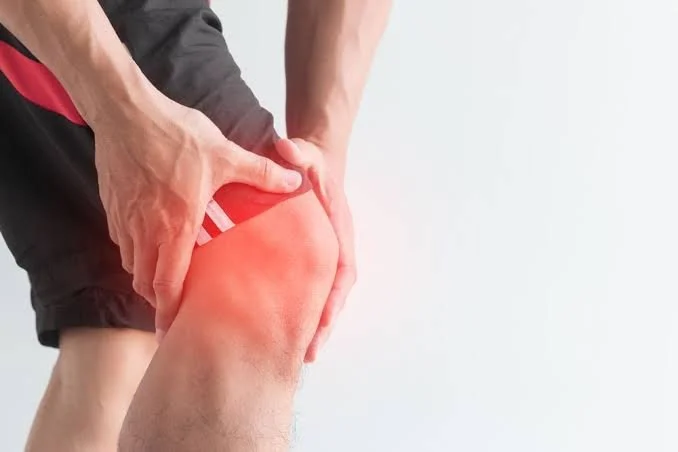
Let's talk about knees
I'll go out on a limb (pun intended): I've rarely met a cranky knee that didn't also have a foot not doing its job.
Now — I'm not saying the foot is always the root cause. Knee pain is multifactorial, and the honest science backs that up. A large systematic review by Neal and colleagues (Journal of Foot and Ankle Research, 2014, pooling over 6,000 people) found that a pronated, poorly-controlled foot is a genuine but small piece of the puzzle for problems like patellofemoral (kneecap) pain and shin splints — one risk factor among several, not the whole story.
But here's what I see in practice: when you teach a foot to collapse, feel the ground, and re-supinate cleanly with every step — and you build its proprioception and stability — a lot of nagging knee pain quietly packs its bags. The foot is almost always worth a look, even when it isn't the villain.
And it doesn't stop at the knee
Your big toe matters more than it gets credit for. If it can't extend properly (bend upwards), your body has to find that motion somewhere else — often by turning the foot outward to roll over its inside edge. That's the windlass mechanism failing to do its job at push-off.
Turn the foot out, and you change how the hip loads on that side, and how the pelvis and trunk rotate above it. Follow that chain far enough and it's entirely plausible you end up influencing stability all the way up to the opposite shoulder. This concept is called regional interdependence — the idea that a limitation in one area shows up as a problem somewhere seemingly unrelated. I can't promise your stiff big toe is wrecking your shoulder — but I'd never assess one without looking at the other.
The running bit
Weak feet and weak lower limbs are, in my book, hugely underrated when it comes to running-related knee pain. But if I'm being straight with you, the single biggest driver of running injuries isn't your feet — it's asking your body for far more than it's ready to give, far sooner than it can adapt to it.
Your tissues do get stronger with running. But they do it slowly, on their own schedule, and they don't care about your race entry. Pile on the miles faster than they can rebuild, and something eventually gives — strong feet or not. This is what the International Olympic Committee's expert consensus on training load ("How much is too much?", British Journal of Sports Medicine, 2016) spent an entire paper spelling out.
Which brings me to my least favorite modern tradition: the person who hasn't run in years, signing up for a marathon that's four months away. It is, without exaggeration, one of the dumbest things you can do to a human skeleton. And the numbers bear it out — brand-new runners get hurt at roughly double the rate of experienced ones per hour of running: 17.8 injuries per 1,000 hours versus 7.7 (Videbæk et al., Sports Medicine, 2015). Your heart and lungs will be ready long before your feet, shins, and tendons are. That gap is exactly where injuries live.
My rough-and-ready field test? Can you jump rope — or just bounce on the spot — with an alternating foot pattern, non-stop, for 15 minutes? If not, your lower limbs probably aren't yet robust enough for efficient, repetitive running. That's my personal rule of thumb based on 15 years of helping runners, not gospel — but I reckon earning that 15 minutes is a fair prerequisite for injury-free miles. Anyway… I digress.
A word on high heels
Let me be provocative for a second, because I want this to stick: high heels do to your foot mechanics roughly what smoking does to your lungs. Now, obviously that's me being dramatic — nobody's dying of stilettos, and I'd never seriously compare the two on harm. But the pattern is the thing: a small, pleasant, socially normal daily habit, quietly degrading a system you can't easily repair, in ways you won't notice until the damage is done. Flip flops aren’t much better either.
The research on heels is genuinely grim. Women who habitually wear heels develop measurably shorter calf muscle fibers and thicker, stiffer Achilles tendons, which directly reduces how far the ankle can actually move (Csapo et al., Journal of Experimental Biology, 2010). Habitual heel wear is also associated with bunions, knee osteoarthritis, and low back pain.
I'm not telling you to burn them. I'm telling you to keep them to a bare minimum, and to understand exactly what you're trading away.
What to actually look for in a shoe
Two things matter more than everything else combined:
A wide toe box. Your toes are supposed to splay when you load them — that's how your foot builds a stable, spring-loaded platform to push off from. Most conventional shoes taper to a point and squeeze them into a wedge instead. Give your toes room and, over months, they genuinely spread back out toward the shape they were born with.
A thin, flexible sole. The sole of your foot is packed with sensors that tell your brain where the ground is, what it's made of, and how your weight is travelling across it. Bury that under a thick, stiff slab and you've muffled the signal. Thin sole, and your foot can feel again — which is the whole point.
That's exactly what Vivo's are built for: wide, thin, flexible, and out of the way.
So how do you actually help yourself?
It starts with waking the feet up: going barefoot as much as you safely can, and wearing footwear that lets your feet feel and work the way they were designed to. Time to turn those two concrete blocks on the ends of your legs back into the springy, sensing, force-producing marvels they're meant to be.
Here's the part people skip — and it matters. Your feet have effectively been in a cast for years, so ease off the accelerator. When researchers transitioned runners into minimalist shoes over 10 weeks, MRI scans picked up significantly more bone stress (bone marrow oedema) in the minimalist group than in controls (Ridge et al., Medicine & Science in Sports & Exercise — the ACSM's own journal — 2013), and women appeared more susceptible. The takeaway isn't "don't." It's go slowly.
The good news on the other side: the same body of research shows that minimalist footwear, paired with dedicated foot-strengthening work, genuinely builds intrinsic foot muscle size and strength (systematic review, International Journal of Sports Medicine, 2022 — strength gains ranging from 9% to over 50%). It works. It just takes patience.
The exercises that rebuilt my arches
Barefoot shoes gave my feet the freedom to work — but the arches didn't come back on their own. I paired the transition with a handful of specific foot-strengthening drills, done consistently over years. I've put the exact 7 I used into a carousel on Instagram. Go slow, quality over quantity, and let your feet earn each one. Follow along here → @phil.mcdougall
Think of it like this: imagine wearing thick gardening gloves for twenty years, then whipping them off for a painting class. You wouldn't expect the fine control and strength to come flooding back overnight. Same deal with feet. After 15 years in Vivo's — plus a lot of unglamorous arch and stability work — I've gone from flat and lifeless to a proper arch and some genuinely splendid supination. Chuffed.
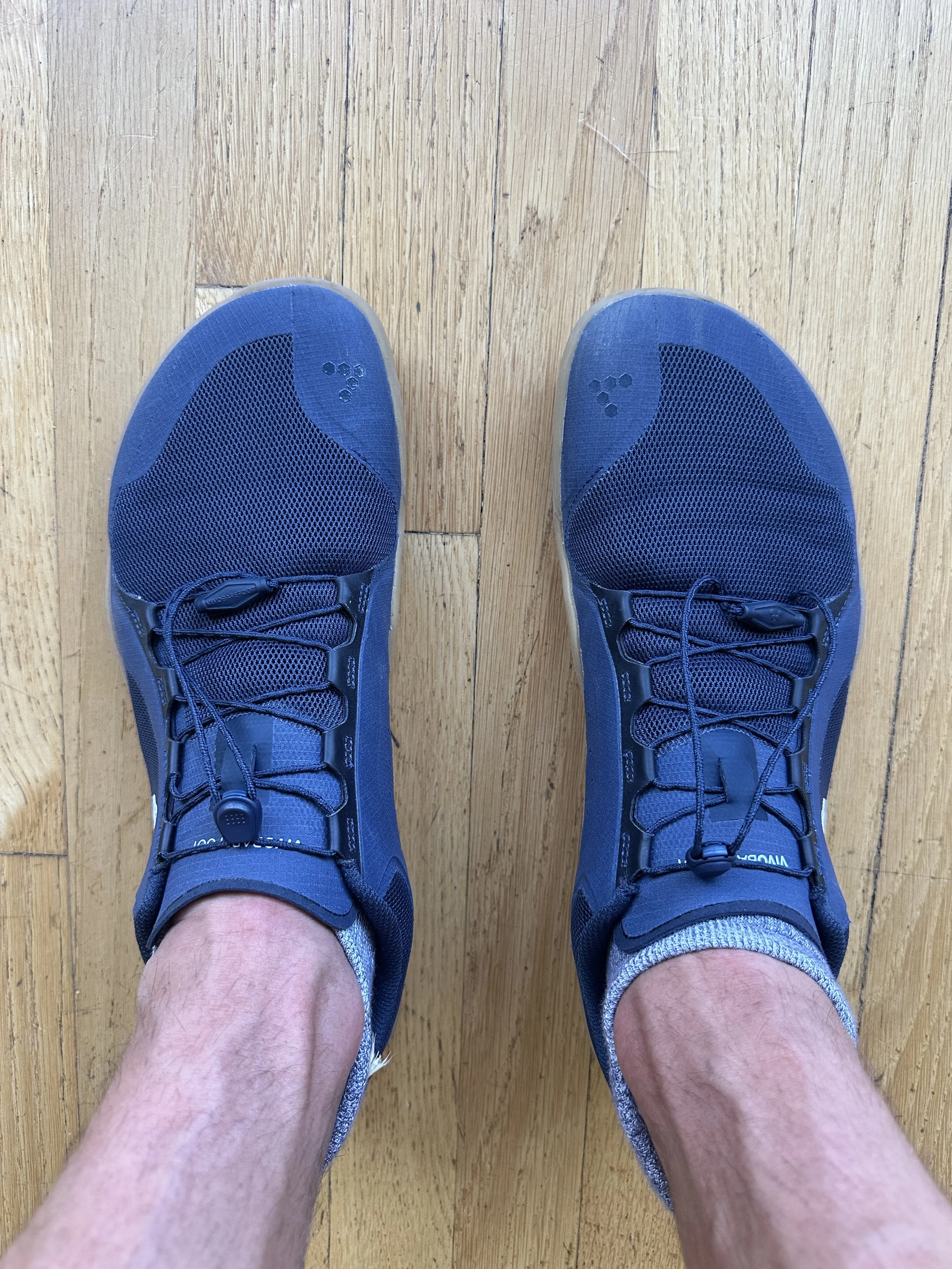
Vivobarefoot Primus Trail FG
What I actually wear
Everyday, work, walking, strength training, trail hiking (when going fully barefoot isn't an option): Vivobarefoot, every time. I like the Primus Trail FG for trail hiking.
Running: personally, I run in Altra's — zero-drop, but with a decent foam sole. Having coached a lot of runners and triathletes over the years, I just don't think most modern humans are built to hammer out miles barefoot on brutal surfaces like asphalt. A rare few transition to pain-free barefoot running, and more power to them — but for most people I recommend a zero-drop shoe with a forgiving, cushioned sole for the road.
On Vivo's (and full disclosure)
They're not cheap, I know. I've tried plenty of other brands since 2011 and always ended up disappointed — usually on durability or quality. For me, Vivo's are simply the best, and I wore and recommended them for a solid decade before I ever became an affiliate.
So, full transparency: I now earn a small commission if you buy through my code — but the recommendation predates the affiliation by ten years.
The code below gets you 25% off but it’ll only work if you’re logged into a customer account and it won't stack on items already on sale.
Spring Pro Promotion (limited time): PHIL.MCDOUGALL250FF(yes, that’s a zero, not an O, in 250FF)
General code (if the one above has expired): MCDOUGALL15
Now go on — give your feet the freedom the rest of your body deserves. VIVOBAREFOOT.COM
Twenty-six bones, thirty-three joints, and over a hundred muscles, tendons and ligaments in each foot. Stop treating them like a pair of bricks.
Phil
