The Blackberry Bush That Made Me a Teen Athlete Coach
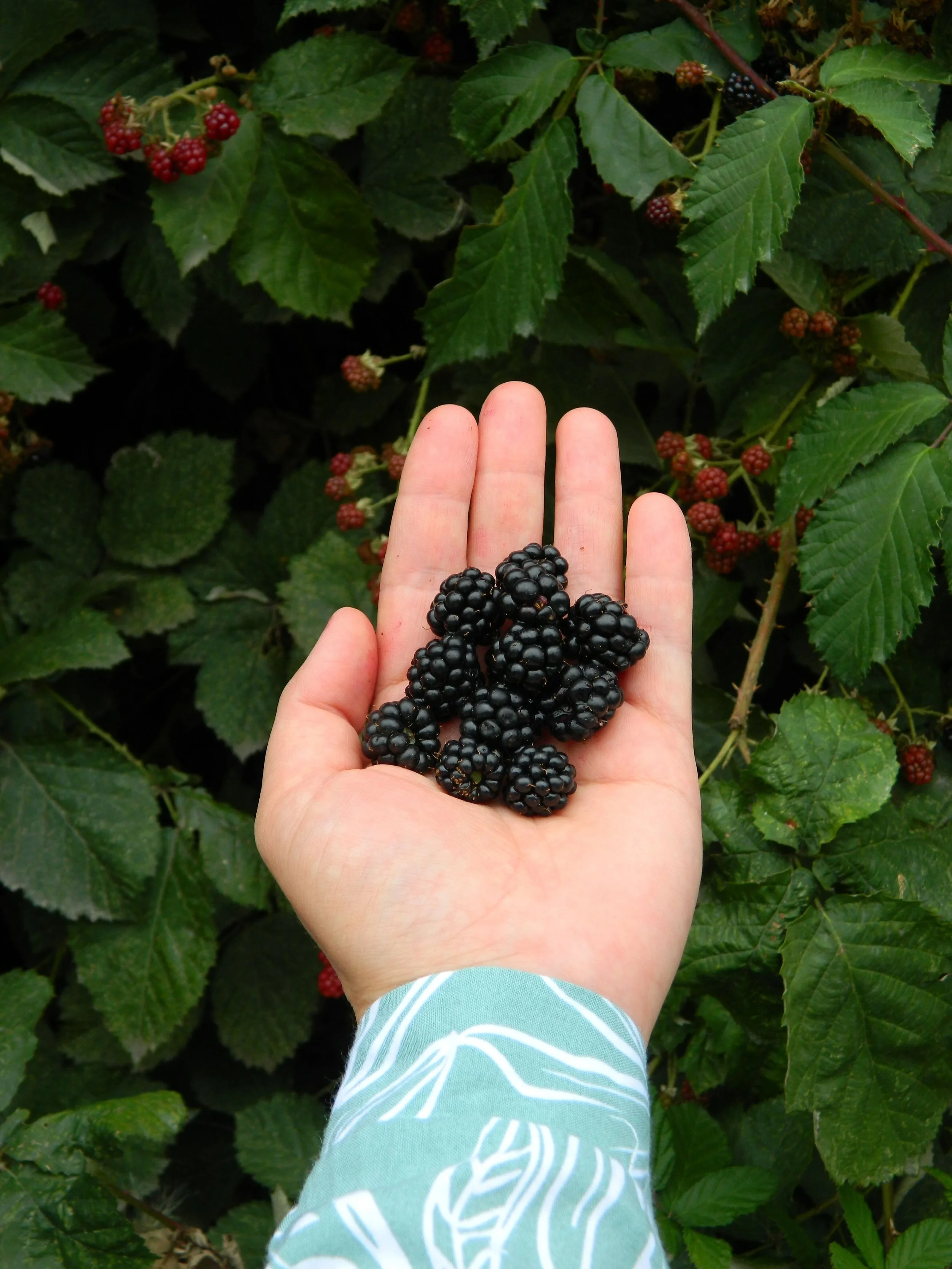
For about ten years I said no to every parent who asked me to train their teenager. Politely, but always no. Then a nine-year-old ambushed me at a blackberry bush in the middle of the pandemic and demanded to know how I'd gotten so many.
She'll be back in a minute. First, the ten years.
Ten years of saying no, very politely
Back when I was coaching in London I'd get invited into schools to give career talks. Military, the switch to coaching, the good parts and the parts that never make it into the brochure. What came back at me was a wall of world-class teenage indifference. I'd leave those assembly halls quietly wondering whether I was any good at talking to other humans.
Years later, after speaking at events where grown adults actually took notes, I looked back and realized the material had been fine. Fifteen-year-olds are simply not built to receive life advice from a stranger in a school hall. Fair enough, really.
Group classes and private sessions with teenagers went much the same way. Plenty of parents who wanted it more than the kid did, and a kid who'd worked out that the fastest route through the hour was to nod at everything.
Honestly, I'd have been identical. My teenage self would have benefited enormously from learning how to move and lift properly. My teenage self was far too busy being fifteen and making poor choices.
So I drew a line. No teens. Then came G, and possibly my favorite client origin story of all time.
A nine-year-old, a French bulldog and ten pounds of blackberries
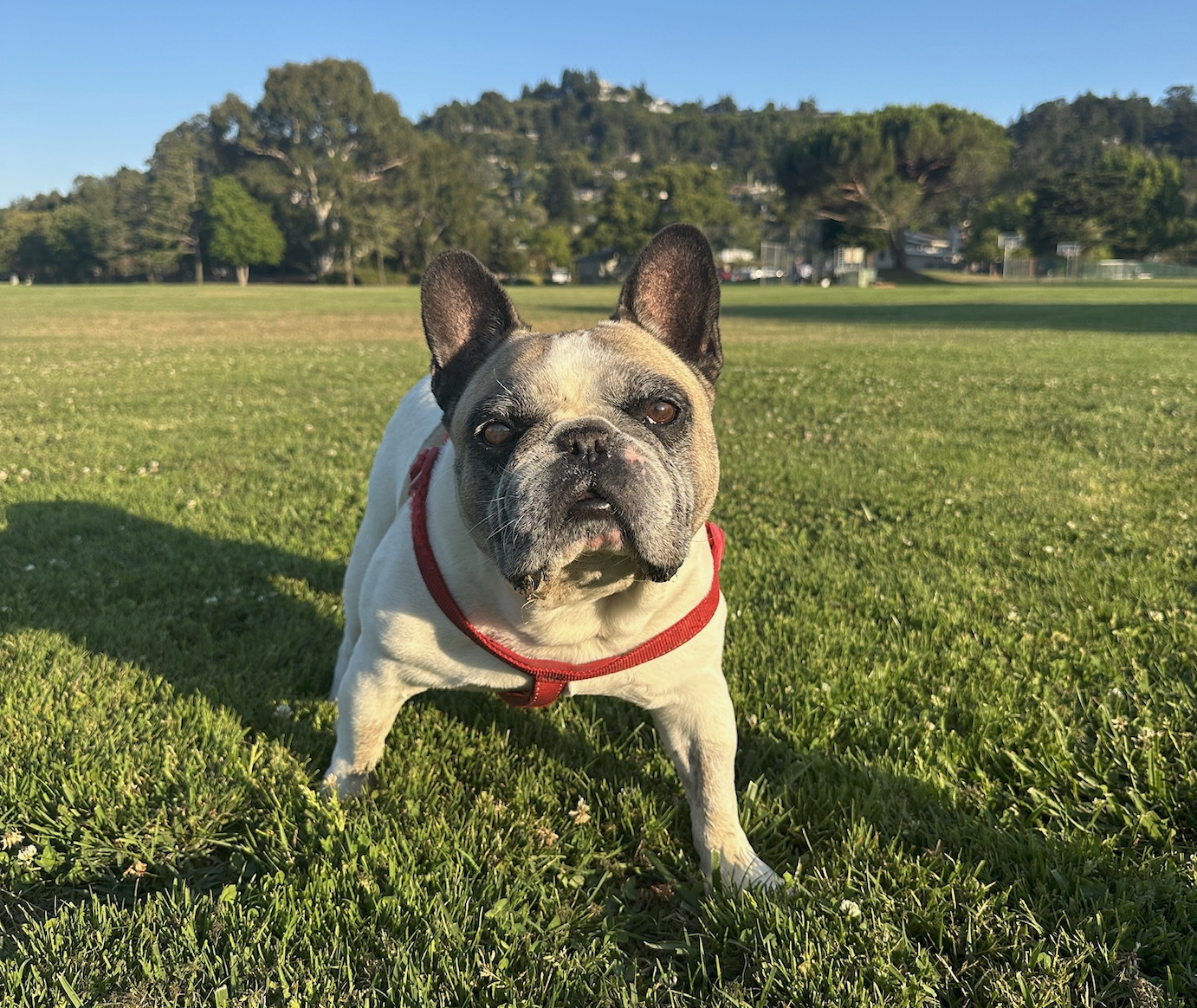
August 2020, deep in Covid. Very quiet street, in a neighborhood I won't name. French bulldog at my ankles, bucket in hand, first ever batch of Street Jam — an annual tradition that started that afternoon and has stuck ever since.
A small voice arrived at bucket height. "How did you get so many?" Tiny ray of sunshine, enormous smile, genuinely amazed by my blackberry yield. My first move was to scan the street for a parent. Nobody. Just me, the dog and the child.
I told her she'd need longer arms to reach the good ones at the top, then drifted to the next bush to put some polite distance between us, on the grounds that a lone man chatting to a small kid is not a good look.
She followed. Obviously. For the next ten minutes she petted the dog and interrogated me while I kept edging bushward, and in that time she told me her name, where she lived and her personal blackberry ambitions. Bless her. Eventually she wandered off home, which turned out to be a short stroll up the lane.
Ten pounds of berries is the amount I need for jam for my clients and family, which works out to two or three ninety-minute picking sessions. Serious business. Her street was prime territory, so a week later I was back at the same bush when a car slowed alongside me and the window came down. "So you're the blackberry picker G told me about?!" Uh oh. Mommy bear.
That's how I met G's mom, who became a personal training client shortly afterward.
The late, great, Henry of Cambridge
The message that broke the rule
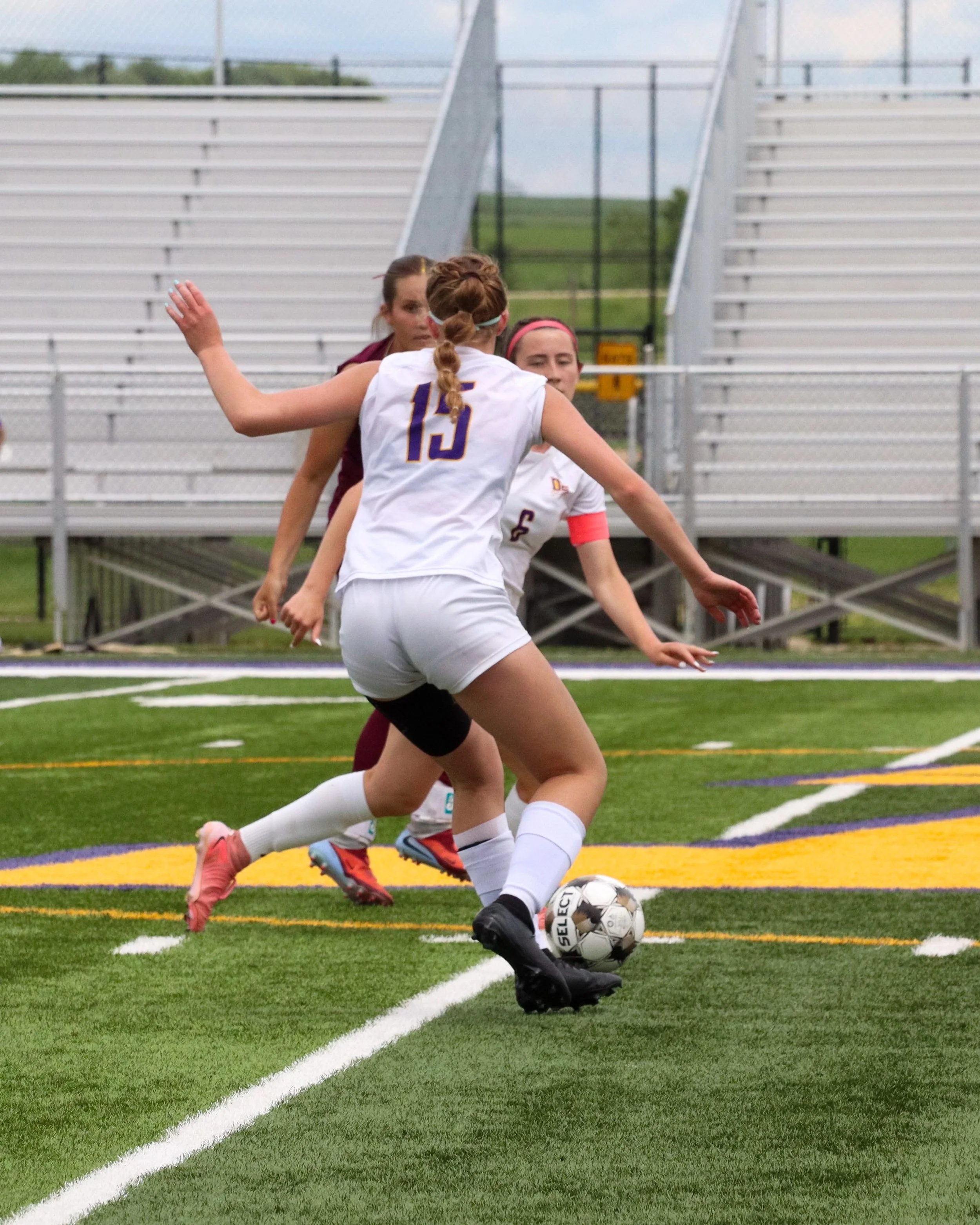
Five years went by. Her mom runs past my place most weeks so we never lost touch, but I didn't lay eyes on G once in all that time. Then last September her mom asked whether I'd take her on. She had, apparently, become a formidable eventer — the triathlon of the horse world — and a serious soccer player.
Breaking my own rule took about four seconds, mostly out of curiosity about how the blackberry kid had turned out. She walked into her first session in October, more than five years after the bucket interrogation. Same lovely smile. Considerably more height. Sorry, G.
What I hadn't anticipated was the coaching itself. Within a handful of sessions it was clear I was working with someone who listens properly, asks good questions and turns up ready. Some of that is years of eventing and soccer coaching. A lot of it is being a secure, happy, well-parented kid with better interpersonal skills than most adults I meet.
Nothing needed undoing, either. No gym folklore, no habits baked in by a bad program, no "my last trainer said." Just a blank canvas and a lot of enthusiasm.
One of my long-running gripes as a coach is teaching the same technical point to the same person over and over. With G I almost never cue anything twice. She acquires movement at the rate of the most elite athletes I've worked with, and I've worked with some genuinely elite ones — special operators included. It's slightly absurd.
Then there's recovery. Strength progress is mostly a function of how fast the body bounces back, and a teenager who eats well is a recovery superstar. G's strength curve over the last nine months has been steeper than almost any client I've had.
Nine months in, having rehabbed her through a soccer injury, her friend S started with me too. S is an accomplished skier, which is putting it mildly, and one of the most agile athletes I have ever worked with, in any setting, at any level. She also wears an Oura ring so she can beat a friend on sleep scores, a level of self-management I didn't reach until my thirties.
Over a beer recently I was telling my pal Michael Sharp about all this. He coaches for Corte Madera FC and used to coach elite youth soccer in Scotland, so he knows the terrain. He laughed at me. "Trust me Phil, they're not all like that. Stick with the ones you've got. They're the creme de la creme." Then I showed him a clip of G training, posted with her and her parents' blessing, and he went quiet for a second. His verdict was that you wouldn't get teenage boys doing that work for another two or three years, because they're not mature enough yet to slow down and learn it. Linked at the end.
What actually happens in a session
Trust comes first, before a single rep. I tell them plainly that although their mom pays the invoice, I work for them. Parents get progress reports. With the exception of any health and safety points, anything the girls tell me in confidence stays with me.
Learning that they have the power to shape a coaching relationship is genuinely valuable at that age, so I push them to use it. Tell me what you want. Tell me how you're feeling, what you love, what you'd happily never do again. Being there at all is entirely their call, and if either of them ever wants to stop they can just say so, because I only want them in the studio if they actually want to be in the studio.
I'm strict about exactly one thing: always show up. No cancellations, ever, however grim the day has been. I can always reshape a session around whatever state someone walks in with.
Nutrition gets drip-fed rather than lectured. Iron comes up a lot with young female athletes, so we talk about why vitamin C needs to be in the same meal for it to be absorbed properly, ideally from actual food rather than a capsule.
On the physical side, mobility, stability and balance come before anything heavy. The way I think about the teenage years is that the growth plates are laying down bone faster than the nervous system can keep up with, which is why an otherwise brilliant athlete can suddenly move like a baby deer. Complex movement patterns first, load added once the pattern is genuinely owned.
Before serious weight gets involved, there's a whole technical vocabulary to build: pelvic floor activation, breathing and intra-abdominal pressure, spine mechanics, neck stability, building an arch in the foot. Learn that at fifteen and it's theirs for life.
Gymnastics runs through a big slice of their training. Handstands, rings, balance work, hanging, crawling, anything that demands the whole body cooperate at once. My adult clients who did gymnastics as kids are consistently the best placed to make progress, and body awareness like that is built young or built the hard way later.
Variety is the other principle I'm strict about. They get the run of every weird and wonderful tool in the studio, plus borrowed ideas from Pilates, martial arts and club swinging, because a teenager who samples ten disciplines becomes a better athlete than one who drills the same six exercises.
We also go to the track. I film them sprinting, then walk them through a full mechanics breakdown, and it's remarkable how much speed shows up from nothing more than a change in limb position and where the head is pointing.
Strength, power and agility sit on top of all that, never underneath it. And the whole thing flexes around real life — what's happening in soccer practice, where the next game is, how school is going. It's the entire pie that matters, not one slice of it.
The window that's open right now
Plenty of the adults I train arrive carrying something left over from their teens. An injury that was never properly rehabbed. A functional leg length discrepancy nobody looked at. Twenty years later it shows up as a cranky hip and a very expensive series of assessments and treatments.
Some coaches take the view that growing kids sort themselves out and it's best not to interfere if there's no pain. I disagree, cheerfully but completely. While a body is still growing and highly malleable is the single best moment to solve a problem, address an imbalance and lay down neural pathways that hold. That window doesn't stay open long.
Uncle mode
My family is all back in Wales, so I go embarrassingly soft around these two. Sometimes they go straight from an hour with me to two hours of soccer practice, so I’ll make them something to replace sodium and glucose and get them closer to their protein for the day. I suspect this gives me roughly the same joy my grandmother got from baking us cakes.
There’s no complaining, no adult woes handed over at the door, no bad energy in the room. Just two people who want to be there.
Which is probably why those hours don’t land in my head as work at all. Odd as it sounds, I come away from those sessions feeling grateful to them — for showing up, for taking it seriously, for letting me coach them in the first place. Not a sentence I’ve ever written about a training session before.
What I find most satisfying about any of this, by a distance, is the influence. I had coaches growing up who I still think about decades later, and getting to be that person for someone else is a genuine privilege. The principles and techniques I’m handing over now — how to brace, how to breathe, how to move well under load — will still be theirs at forty. Golden stuff, learned at fifteen, kept forever. Most lifelong exercise enthusiasts never come across it at all.
These two are going to be running things one day
What's next, and one small ask
Right now I'm close to full, so I've put a temporary freeze on new adult training inquiries in order to keep space open for teen athletes. Where I think this is heading is a proper specialty: injury prevention and performance training for young athletes chasing college soccer scholarships and other high performance sports goals.
If there's a parent in your life whose kid trains hard and deserves to be coached like a proper athlete rather than a small adult, feel free to forward this to them. And if that describes your own household, my door in Mill Valley is open for a conversation about what their training could look like.
Someday I'll ask G whether she made it to the top of that blackberry bush. My guess is she stopped needing longer arms a while ago.