
The silent thief — and what 15 years of training women taught me about beating it.
One of my clients fractured her pelvis by sitting down in a wooden chair. Not falling off it. Not tripping into it. Just sitting down a little too heavily.
Advanced osteoporosis does that. It turns the everyday — a chair, a curb, a hug — into a hazard, and by the time it announces itself with a fracture, the damage has been decades in the making. In complete silence.
Why trust a personal trainer on bone health?
Fifteen years as a personal trainer and remedial massage therapist, and the overwhelming majority of the people I've worked with have been women — the youngest 12, the least young 86. (I don't use the word "old" around my clients. They've earned better.) That range means I've watched bone health play out across an entire lifespan rather than a snapshot of it.
I've also sat through more anatomy and physiology courses than I can count, going back to my sports massage training in London in 2012. But the real education came from clients: the pelvis fracture from that chair, and a run of others — fractured arms, collarbones, ribs, all from falls a healthier skeleton would have shrugged off. Once you've seen that up close, prevention stops being abstract.
What is osteoporosis?
"Osteoporosis" means porous bone, and most people picture the wrong thing. Your bones don't shrink, and the material they're made of stays chemically normal. What changes is the architecture. Cut a healthy bone in half and the inside isn't solid. It's a dense three-dimensional lattice of tiny struts called trabeculae, laid down along exactly the lines of force that bone habitually handles — maximum strength, minimum weight, all of it built in response to how you've used it. In osteoporosis, the outer shell thins and that lattice loses struts. Fewer beams, thinner beams, bigger gaps. Same bone, same size, quietly hollowed out from the inside.
Hence the silence. A hollowed-out bone doesn't ache or stiffen or warn you. It holds and holds and holds — until one day, under a load it used to handle without a thought, it doesn't. The spine takes the worst of it, and compression fractures there are what cause the stoop and lost height people associate with aging. The neck of the femur is the other classic: that's what a "broken hip" actually is.
Why is osteoporosis more common in women?
A quick clarification, because there's a myth worth killing: osteoporosis is not a women-only condition. Men get it too, and men have a higher risk of dying after a hip fracture. So if any blokes are reading, don't tune out. That said, women bear the brunt, and the reason is hormonal. Estrogen helps keep bone breakdown in check. When it falls away at menopause, that protection goes with it and bone mineral density drops sharply — which is why postmenopausal women are the highest-risk group of all.
Numbers make the case better than I can: around 30% of American women aged 60 to 70 have osteoporosis, and by 80 it's 70%. Roughly 30% will suffer a fracture because of it. By the time a woman reaches her eighties, this isn't a risk factor. It's the default.
When does bone growth stop? Peak bone mass explained
This bit can be confusing, so it's worth slowing down. Bones develop in two ways and each has its own deadline. They're years apart.
1. Getting longer. Long bones lengthen at growth plates near each end. That runs until roughly 18 to 21, when the plates fuse shut permanently. Once they've closed, you are as tall as you'll ever be.
2. Getting denser. A separate process — thickening the shell, building out that internal lattice — and it carries on for several years after you've stopped getting taller. Maximum density, your peak bone mass, arrives around your late twenties.
That leaves a stretch of five to eight years where you've finished growing upward but your skeleton is still packing bone in. Most women never hear that window exists.
The part that matters most: both deadlines govern how much bone you naturally accumulate. Neither closes the door on how much you can improve. Density stays responsive to load for life — your bones are remodeling as you read this, and they'll still be doing it at 86.
Picture your skeleton as a building. The frame goes up through your teens, finished by 21, plans final, no adding a storey. The fit-out — steel, concrete, internal beams — runs a few years longer and finishes around 28. Maintenance never closes at all, and a well-maintained ten-storey building outlasts a neglected one every time.
Why exercise in adolescence builds lifelong bone density
If there's a teenage girl in your life, this is the part worth reading twice.
At birth, bones are almost completely smooth. Featureless. Every ridge, crest, and knobble on an adult skeleton — the roughened patches where tendons anchor, the flared ridges along the femur — is carved by muscles pulling on bone. Your skeleton's shape is a record of how you've moved.
Bone isn't a passive frame that muscle hangs off. It's a responsive tissue that adapts, constantly, and rebuilds itself around the loads you actually impose. Load it, and it lays down material. Don't, and it recycles that material to save on maintenance.
Frequency matters more than duration, too. Bone responds quickly to loading and then goes deaf to the signal for a while before the cells will pay attention again — which is why two hours on a Saturday is worth far less to a growing skeleton than fifteen minutes of jumping, sprinting, and climbing every day.
The case for daily activity in a growing girl, then, isn't really about fitness or weight or sport. It's construction work on a building she'll live in for eighty years, and the site closes permanently in her twenties.
A sedentary adolescence isn't a neutral choice you can make up for later. It's a smaller building with a weaker structure — and you don't find out how much weaker until decades afterward, when you sit down in a wooden chair.
How bone remodeling works: the Pac-Man analogy
The way I explain remodeling to clients always lands, so let me try it on you.
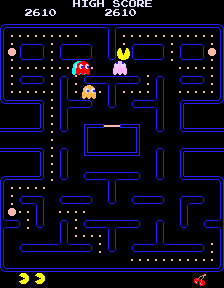
Two crews work inside your bones around the clock. One builds (osteoblasts). One eats (osteoclasts — your Pac-Men). The Pac-Men roam through your skeleton gobbling minerals and clearing out any bone that isn't earning its keep, because your body won't pay to maintain a structure you're not using.
They love astronauts, swimmers, and divers. Nobody in those groups puts real load through their skeleton, so the Pac-Men feast — astronauts lose bone at a startling rate in orbit for exactly this reason.
Only one thing keeps them in check: tension and compression flowing through bone, the pull of muscle and the push of load. Use it or lose it, quite literally.
How to increase bone density at any age
Here's the hopeful headline: you can improve bone mineral density at any age. The teens and twenties matter most, but the skeleton keeps responding to weight-bearing exercise and strength training for life — and it's never too late to start.
Strength train 2–3 times per week. The single most effective lever, and the one ACSM has long recognized as a cornerstone of bone health.
Get on your feet. Walking, jogging, tennis, dancing — any weight-bearing activity where your skeleton supports and absorbs your body against gravity. Jump roping deserves a special mention: cheap, portable, and exactly the repetitive impact loading bone responds to. Two minutes of it does more for your bones than twenty on a stationary bike.
Feed the system. Calcium is the headline mineral, but vitamin D is the doorman — without it you don't absorb what you eat. And eat enough overall: chronic underfueling and very low body weight are genuinely bad for bone.
Protein. Big enough to deserve its own post, which it'll get. For now: bone matrix is roughly half protein, so skimping asks your construction crew to build without timber. Your daily target is 1.6 g per kilogram of bodyweight — a floor for anyone serious about strength, not a goal.
That figure isn't plucked from the air. A 2018 meta-analysis in the British Journal of Sports Medicine (Morton et al., pooling 49 studies) found that protein intake up to roughly 1.6 g/kg per day maximized the muscle and strength gains people got from resistance training — beyond that point, more protein added nothing measurable. So for a woman lifting to protect her bones, 1.6 isn't a lot. It's simply where the benefit tops out.
In pounds, that's about 0.73 g per pound:
Daily Protein Minimum by Bodyweight
120 lb bodyweight: 87 g protein
140 lb bodyweight: 102 g protein
160 lb bodyweight: 116 g protein
180 lb bodyweight: 131 g protein
Most women I start tracking land near half of that. And note minimum — over 65 or training hard, aim comfortably north of it.
Also consider the bioavailability rate of your protein source. Animal protein is almost entirely absorbable. But if you’re restricted to plant-based, check the evidence-based bioavailability rate of the specific source.
Fall prevention and strength training for women over 65
My clients over 65 are the Silver Team. Not "older," not "senior." It started as a joke and stuck, mostly because they show up in all weather, never cancel, and quietly out-train people half their age. Three skills are non-negotiable for them:
How to tumble and fall. Most osteoporotic fractures happen because of a fall.
The Turkish get-up. The best "get down to the floor and back up again" pattern there is.
The deadlift. Just picking things up off the floor, which we all do daily.
Two moments explain why those three are on the list.
The first I watched happen. Descending Mount Tam with Kehrela — 70 at the time — she went over head first. That's the scenario that puts a woman her age in the ER for a season and possibly out of the hills for good. She rolled, exactly the way we'd drilled it on days when I'm sure she wondered what the point was, came up, brushed herself off, and we carried on down. Nothing broken. Luck had nothing to do with it: a trained reflex did precisely the job it was trained for, at the only moment that ever mattered.
The second is the reason I do this job. Helen, 75, mentioned in passing that on a recent flight she'd hoisted a man in his fifties' bag into the overhead locker. Not her bag. His. Nothing in this work is more satisfying — a woman in her seventies casually being the most capable person in her row, and thinking so little of it she nearly forgot to mention it.
Not fragility management. Capability.
Best exercises for osteoporosis and bone density
Crawling — loads the whole system through wrists, shoulders, and spine
Hanging — decompresses the spine, builds grip and shoulders
Floor press — upper-body loading with a built-in safety ceiling
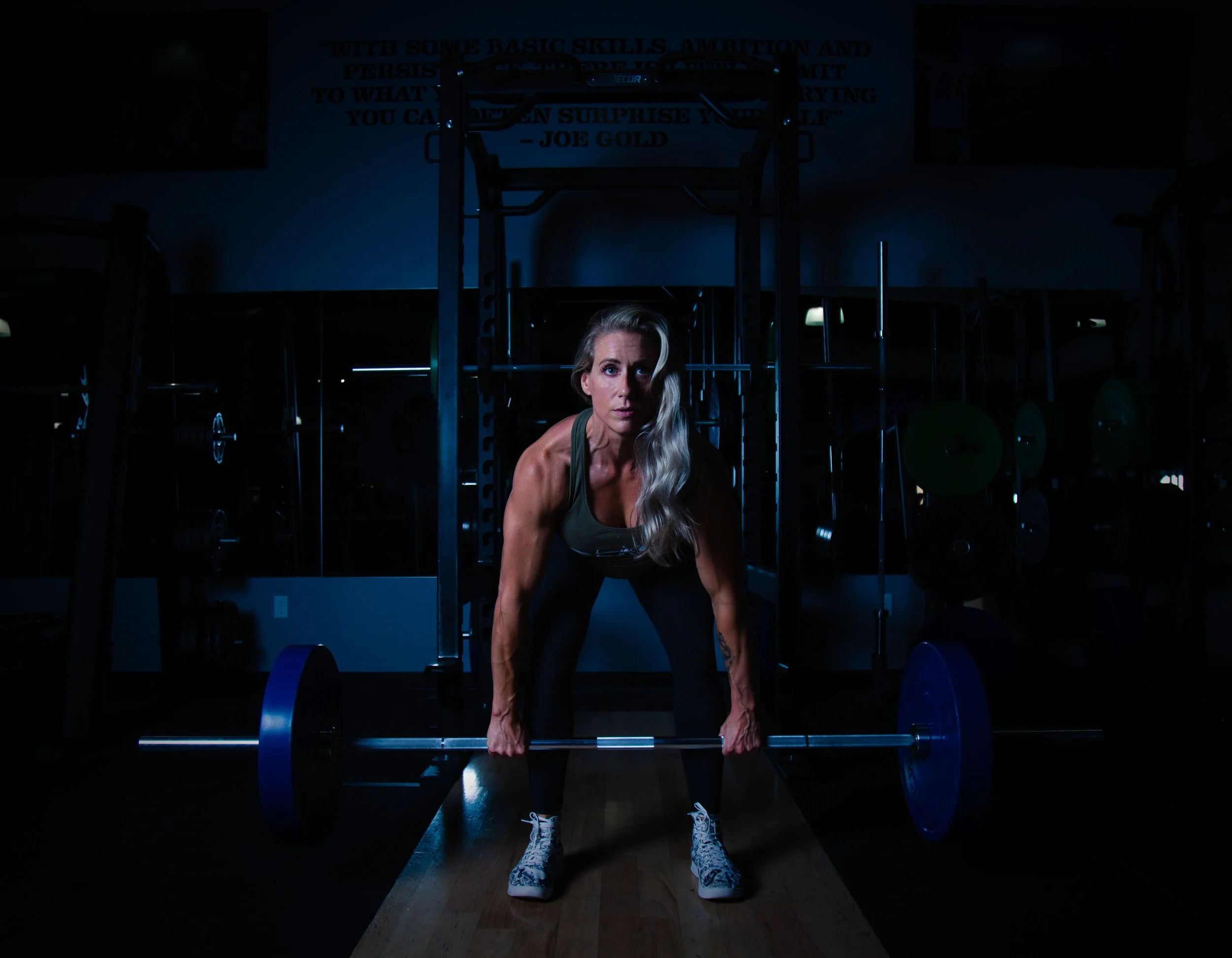
Deadlift — the queen of bone loading
Loaded step-ups — single-leg load plus balance, fall prevention in disguise
Turkish get-ups — strength, mobility, and floor confidence in one
Jump roping — impact, coordination, and ankle resilience from a $10 piece of kit
Do swimming and cycling build bone density?
Quick word on cycling and swimming: I'm not telling you to quit them. They're wonderful for your heart, lungs, and joints, and I'd never talk anyone out of movement they love.
Neither is weight-bearing, though. Your skeleton is either supported by water or perched on a bike, so it never gets the signal. If they're your only exercise and stronger bones are the goal, the job is half done. Keep them — add loading on top.
Where to start: get a DEXA scan in Mill Valley
Everything above is easier to act on once you stop guessing. A DEXA scan (also called a bone density scan) is the gold standard for measuring bone mineral density: quick, painless, and it tells you exactly where your skeleton sits.
Good news if you're in Mill Valley or anywhere in Marin — BodySpec brings a mobile bone density scanning van to The Yard in Mill Valley. Around $59, about 15 minutes, and you'll walk out with your bone density numbers plus a full body composition breakdown.
Book here: https://www.bodyspec.com/scan-me/the_yard_mill_valley
If you're already one of my clients, come and talk to me about what the results mean — whether that's a bone-density strength program built from scratch or learning to fall like Kehrela. If you're not, watch this space: I'll be publishing a full anti-osteoporosis program here in the near future.
Remember the building. The height and the thickness of the walls was set in your twenties and there's no changing that. The strength of the walls, the beams, the steel running through it? Still your call… today.
