
The Six Tests I Use to Green-Light Runners (And Why Jump Roping Predicts Most of It)
There was one group of Royal Marines recruits who never seemed to pick up running injuries: the boxers. Any lad who came in with a boxing background generally sailed through training and was usually near the front on anything physical.
During my time on the 42 Commando boxing squad, we kicked off every three-hour technique session with 30 minutes of non-stop jump roping. And that was after the morning six-miler. When I first joined I'd never really jumped rope before, and I looked like a proper uncoordinated mess. But when you're stuck on one spot with no other option, I promise you pick it up fast.
After I left the Marines and started training people in the City of London, a lot of my clients came to me with running goals: military prep, triathlon, Tough Mudder, marathons, the lot. That's where I really started to see how many running injuries stop people dead before they ever reach the start line.
Here's the thing though. In my experience, a "running injury" is rarely actually caused by running. Running is just the catalyst. Most of the time the real culprit is what you were doing for the ten years before you laced up: sitting. You didn't get hurt by running. You got hurt by sitting in a chair for X hours a day for Y years and then going running. The load finally found the weak link.
And that weak link tends to be the hips and/or a lack of power endurance (bounciness) in the lower limbs. There's decent evidence for this. Prolonged sitting shortens and stiffens the hip flexors, and a 2021 systematic review in Sports Medicine (Konrad and colleagues) links tight hip flexors to reduced glute activation, poorer movement patterns and a higher back-pain risk. So the desk isn't a neutral place to spend your day. It's quietly setting you up.
Anyway, the pattern kept repeating. The former boxers turned desk-bound weekend warriors almost never complained of knees or low backs after big running blocks. What did they all have in common? Jump roping.
I started slipping jump rope work into my runners' programs and noticed something obvious pretty quickly: the ones who couldn't bounce for more than a couple of minutes were the same ones carrying all the injuries. Once I built people up to jump roping non-stop for 20 minutes, the results spoke for themselves. Far fewer people falling off the wagon with niggles.
That's not just a hunch, either. Jump roping is essentially a plyometric, and plyometric work has a strong track record here. The big one is Lauersen and colleagues in the British Journal of Sports Medicine (2014), whose meta-analysis found that strength and neuromuscular training cut overuse injuries to less than half. On the performance side, García-Pinillos and colleagues showed in the International Journal of Sports Physiology and Performance (2020) that adding jump rope work improved 3km time-trial times, lower-limb reactivity and foot-arch stiffness in runners. There's even a 2023 randomised trial in Scientific Reports (Sanno and colleagues) where just five minutes of daily hopping improved running economy in recreational runners. Cheap, simple, and it works.
Jump roping mimics the landing pattern of running almost perfectly, if you kiss your heels toward the ground on every bounce. If you can bounce in an alternating single-leg pattern non-stop for 20 minutes, you've got the green light to run as far as I'm concerned. If you can't, your lower limbs just haven't built the power endurance yet. And let's be honest: if you can't bounce on the spot for 20 minutes, you sure as hell can't bounce in motion for much longer. You'll start compensating around that weakness and probably hurt yourself.
So, another decade of helping everyday people run pain-free later, I've boiled it down to a series of litmus tests. I built these off the back of a load of certifications and continued education, then years of field-testing and tweaking with real runners over 15 years as a trainer. Here they are. Check my instagram for video demos.
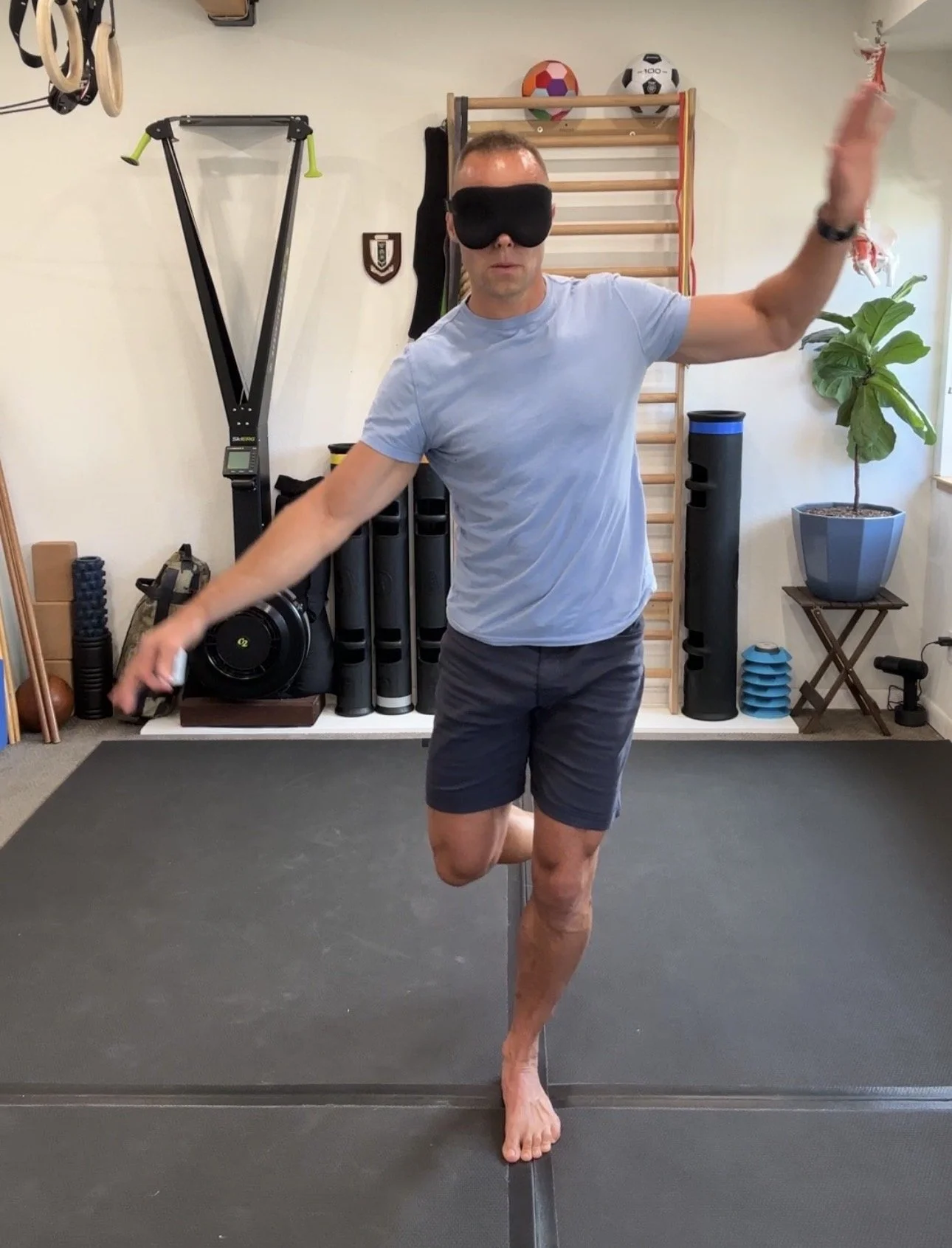
1. Blindfolded Single-Leg Balance
Balancing foot remains glued to the floor — no shifting or hopping. You can do anything you want with the other limbs.
Green: 30 seconds
Amber: 15–29 seconds
Red: 0–14 seconds
Closing your eyes takes vision out of the equation, so your balance relies purely on proprioception coming up through the foot. That matters, because running is a single-leg activity. Every stride is a moment on one leg. And the research is clear that poor single-leg balance and proprioceptive control are genuine risk factors for lower-limb injury, particularly at the ankle (Doherty and colleagues, Sports Medicine, 2014). If you can't balance on one leg, running on it is a gamble.
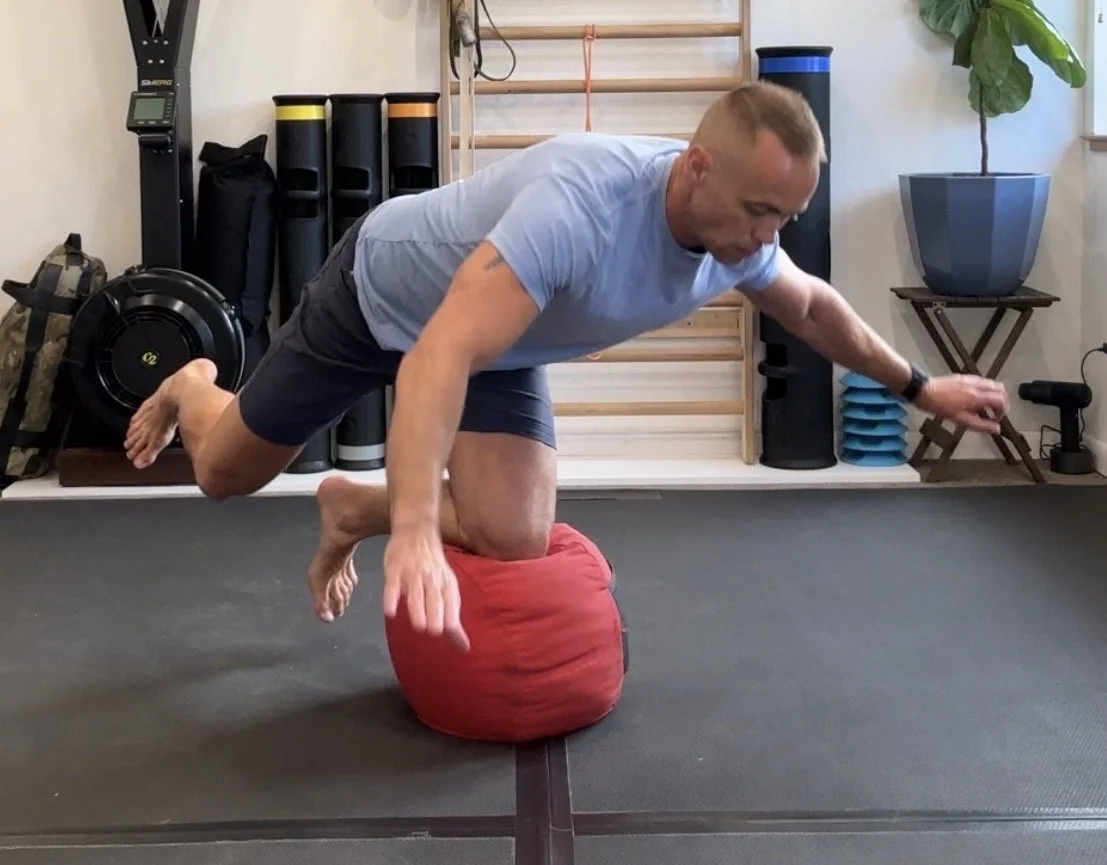
2. Single-Knee Balance and Hip Hinge
Balance on your shin and knee on a slightly elevated surface, such as a sandbag or some cushions. Start in tall kneeling with non-balancing knee up at hip height. Slowly send the non-balancing leg back and gently touch the floor. Return to the start position. Repeat.
Green: 60 seconds
Amber: 20–59 seconds
Red: 0–19 seconds
This one isolates hip stability. A lack of it is at the root of loads of so-called running injuries: cramping low backs, dodgy knees, the usual suspects. This isn't just gym-floor folklore either. A systematic review in the Journal of Science and Medicine in Sport (Mucha and colleagues, 2017) found hip abductor weakness was associated with several running-related injuries, most consistently IT band syndrome. Weak hips upstream, angry knee downstream.
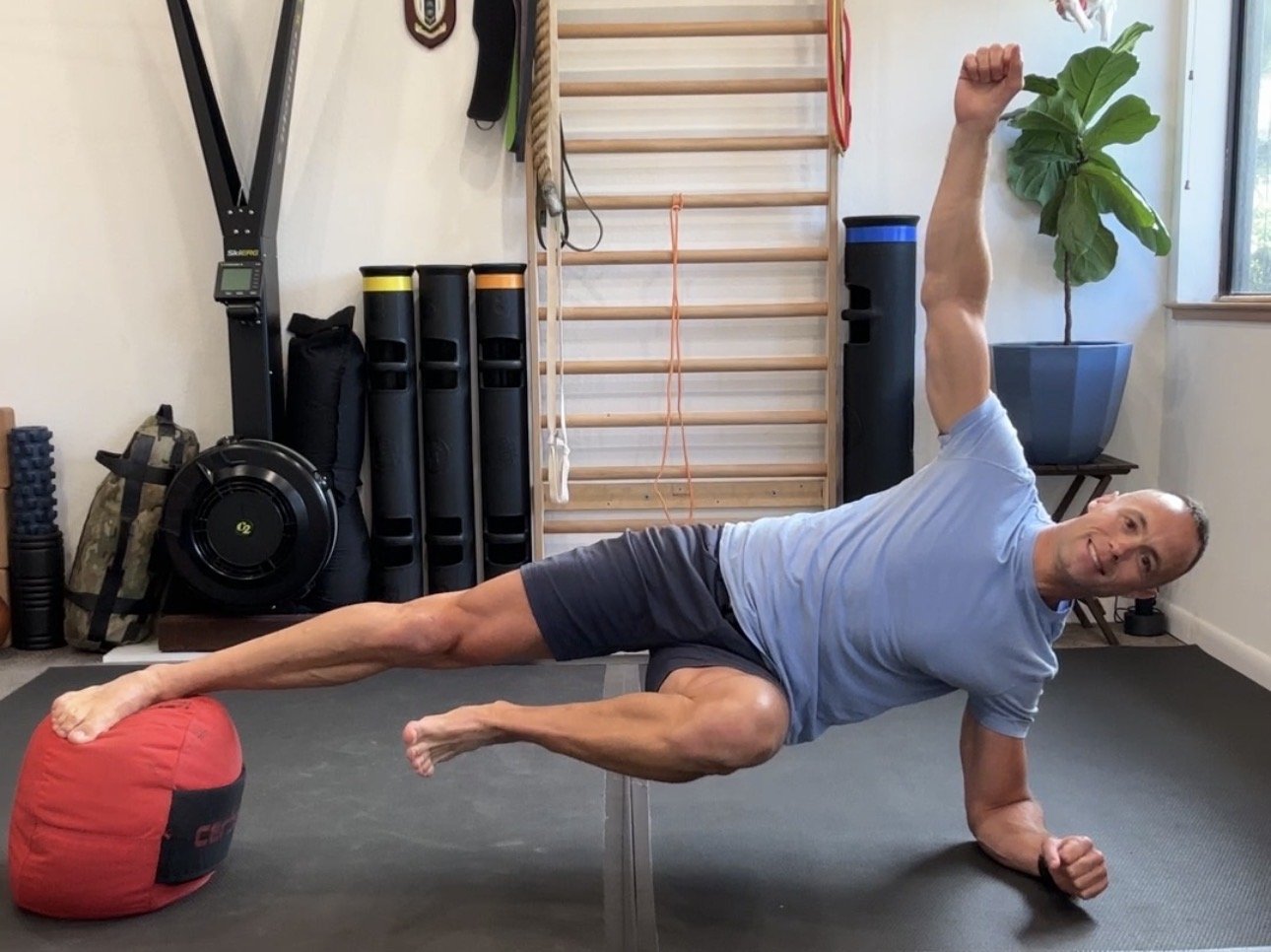
3. Medial Stability Plank (Copenhagen Plank)
Timer stops at the very first sign of form failure: tremors, rotating, any movement whatsoever. Perfect statue.
Green: 30+ seconds
Amber: 15–29 seconds
Red: 0–14 seconds
This is one of my favorites because it earns its keep. The Copenhagen exercise it's based on is one of the best-evidenced adductor moves going. Harøy and colleagues ran a cluster-randomized trial in the British Journal of Sports Medicine (2019) and found a Copenhagen-based program cut the risk of groin problems in footballers by 41%. The adductors do a huge amount of quiet stabilizing work every time you land on one leg, so it's no surprise this transfers to runners.
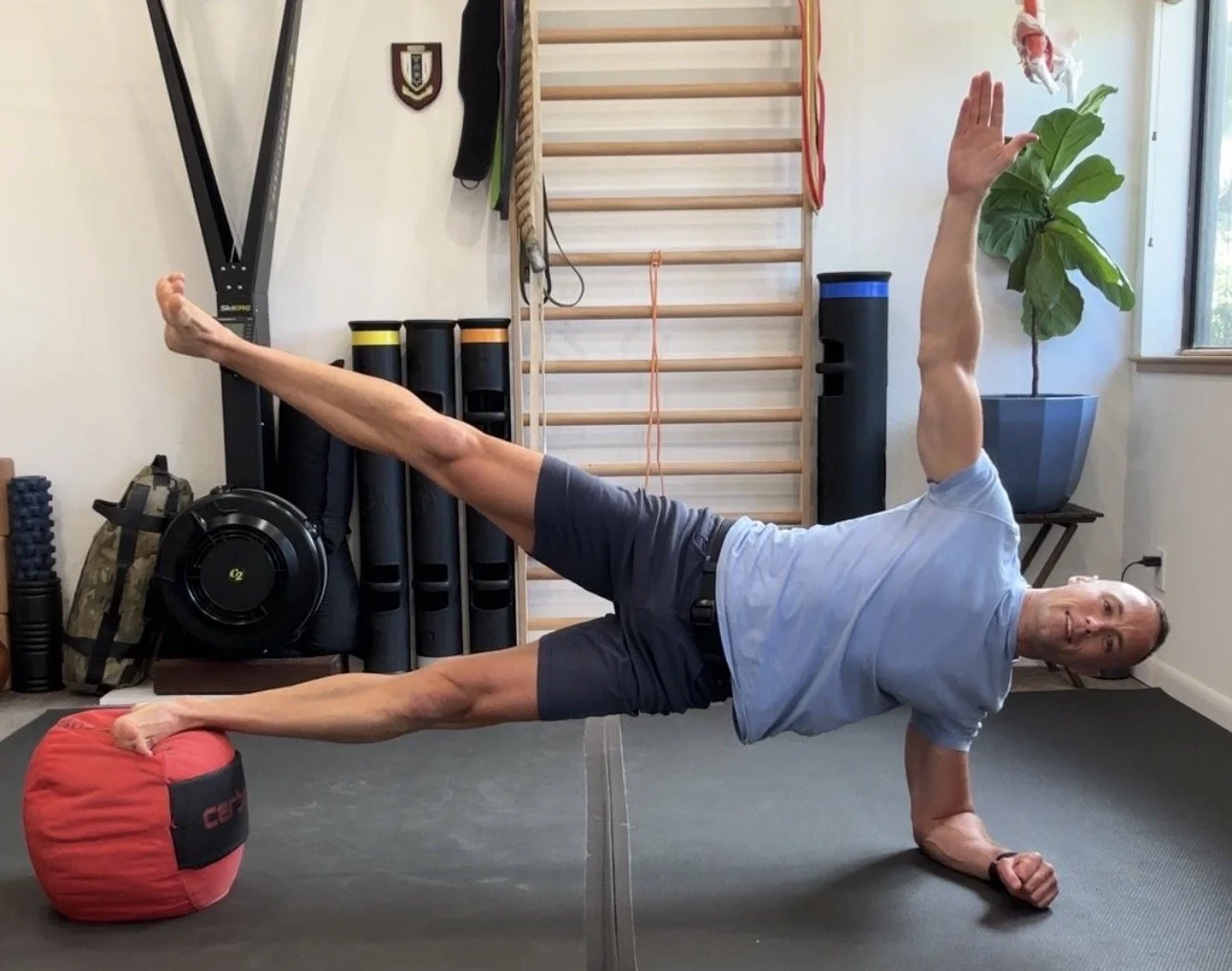
4. Lateral Stability Plank (Side Star Plank)
Same rule. Timer stops at the first tremor, rotation or wobble.
Green: 30+ seconds
Amber: 15–29 seconds
Red: 0–14 seconds
Now here's the important bit for both planks: if there's more than 10 seconds' difference between sides, that on its own is very telling. It's a running injury waiting to happen. This isn't me making it up. McGill, Childs and Liebenson established side-bridge endurance norms back in 1999, and a big part of their work is that the ratio between sides matters as much as the raw number. Healthy people sit around a 0.95 left-to-right ratio. Big asymmetries there have been linked to low-back pain in follow-up work. Your body doesn't love running down a wonky chassis.
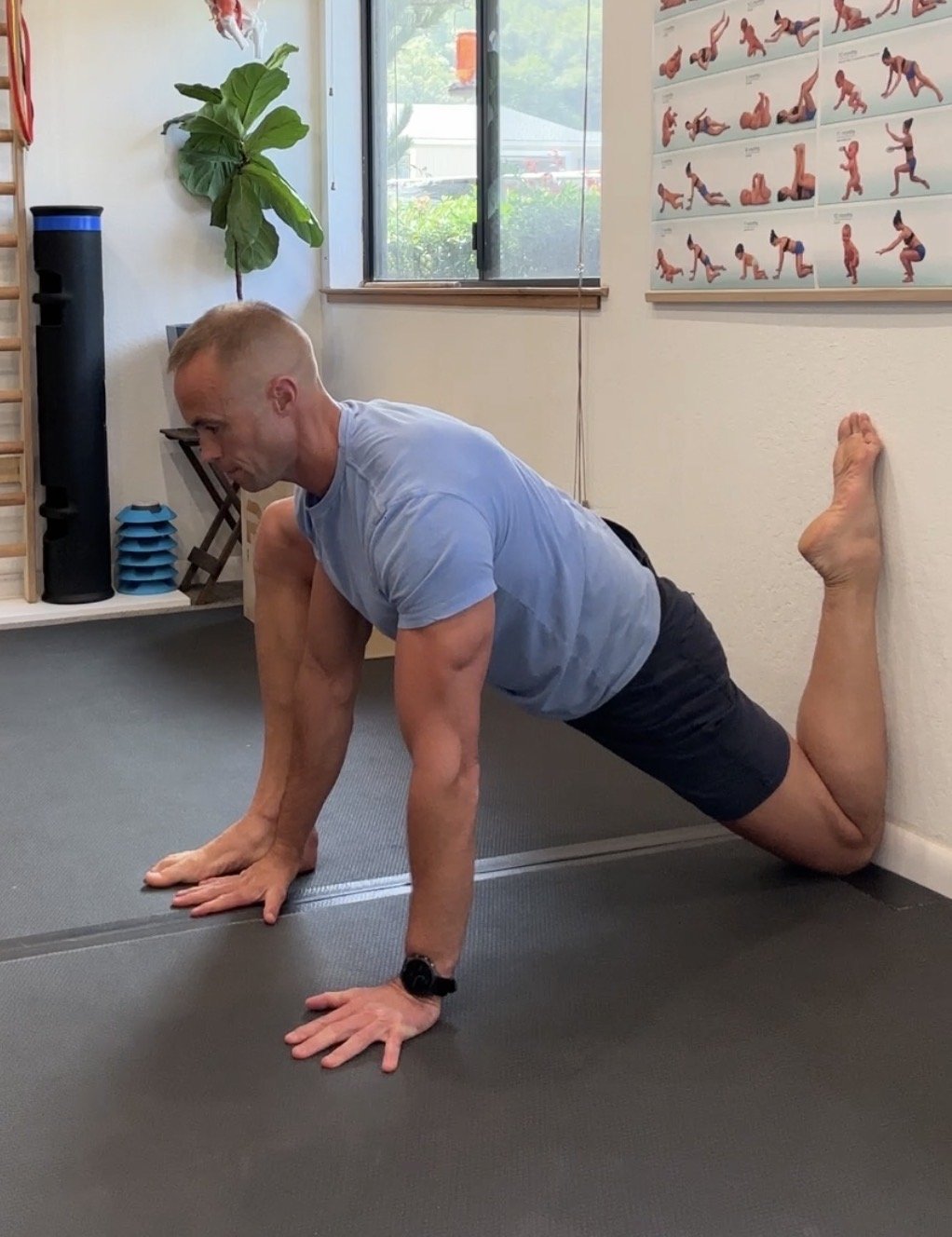
5. Hip Flexor Range Test
Can you get into this position with shin flat against the wall, hands under shoulders, foot next to hand then drop your hips down so it’s making a straight line from shoulder to knee?
Green: yes, easily
Amber: yes, but it feels ugly and awkward
Red: no
Pain-free running needs hip extension. You physically cannot get into an efficient stride without it. If your hips are too tight to reach this position, you'll end up borrowing that range from somewhere it shouldn't come from, usually the lower back or the knee. Remember that hip-flexor-tightness research from the top of the article? This is where it comes home to roost.
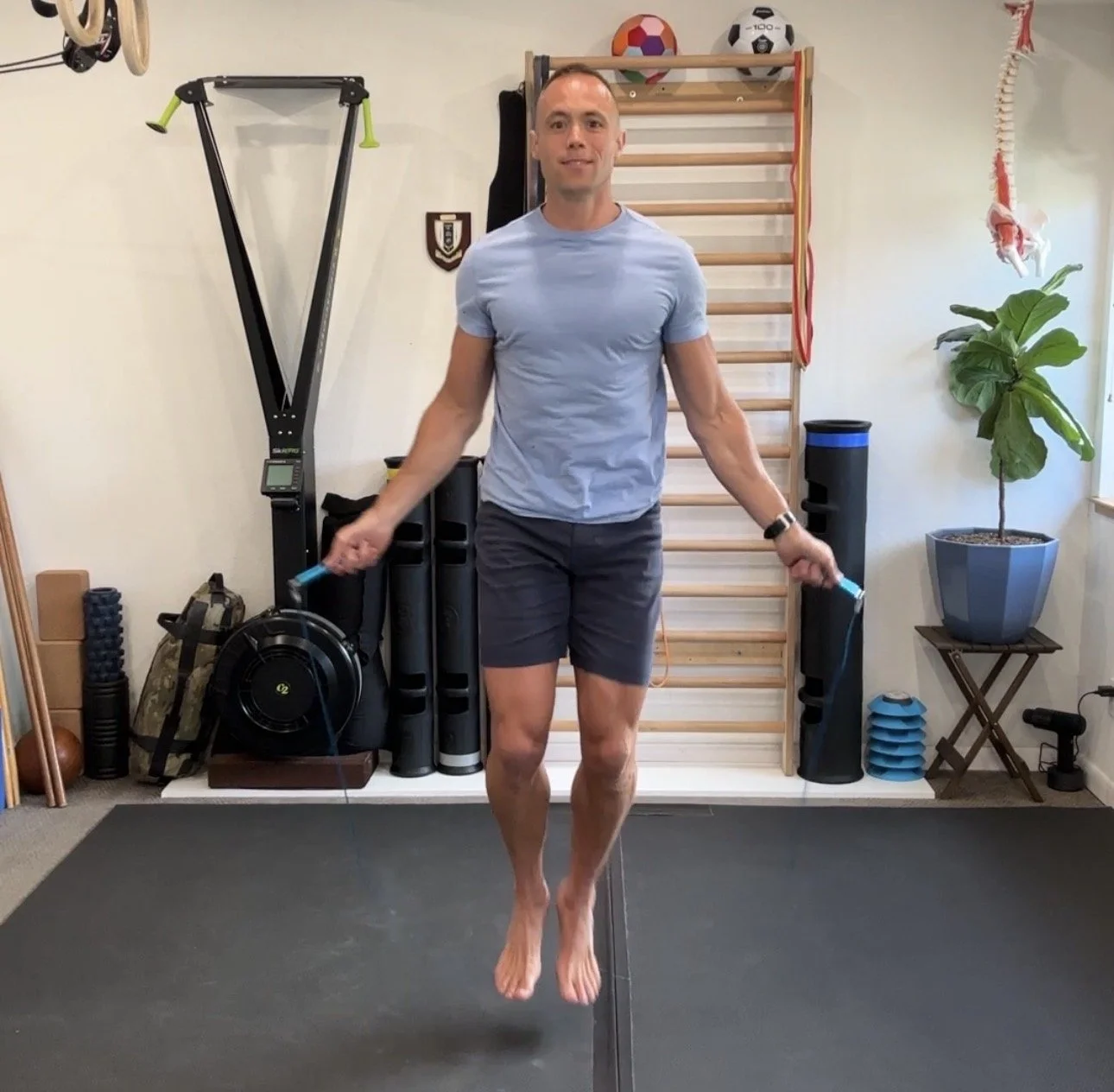
6. Jump Rope Test
How long can you go? You can trip and instantly restart as many times as you like. But if you trip and rest, game over.
Green: 20+ minutes
Amber: 5–20 minutes
Red: 0–5 minutes
You already know why this one's here.
A note to anyone who’s given birth
I'm well aware that jump roping in the traditional sense can be a problem for a lot of postpartum women. Double-leg landings and repeated single-leg bouncing place a high repetitive load on the pelvic floor, and for many people that means leaking — which is an entirely valid reason to avoid it, not a sign of weakness.
Here's the thing though: the alternating-foot pattern is a different story. Running itself is an alternating single-leg activity, so when you're jumping rope with an alternating foot landing (left, right, left, right — exactly like running), the load on the pelvic floor is comparable to running, if not actually less, because the controlled landing pattern that jump roping demands tends to be better mechanics than most people use when they run. In other words, if you're already cleared to run, the alternating pattern shouldn't be the issue.
So if this applies to you, skip the double-foot and the repeated single-leg bouncing entirely and go straight to the alternating pattern. Same test, same standards, same result.
Reading your scores
If you're green across all six, both sides where it applies, you've given yourself a genuinely good shot at running injury-free.
Anything that comes back amber should become a training priority if you've got running goals. Don't ignore it because it's not red.
And if you're in the red on any of them, I'd stick to brisk walking and hiking for now while you build the foundations. There's no shame in it. Better a few weeks of walking than a few months on the physio's table.
Hope this is useful.
